Three Threads, One Tapestry
BioDigital is a sweeping speculative fiction series where the boundaries between memory, perception, and identity begin to blur — and something hidden in the system starts to awaken. Three long-form novels, each set in a shared world on a continuous timeline. The first, Cataclysms, launches with Revelation in Fall 2026.
CATACLYSMS
novel 1 · published in two volumes
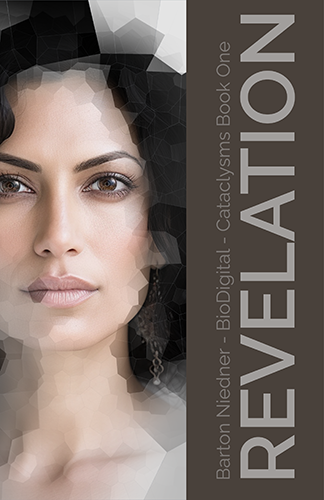
Vol 1: RevelationFall 2026 — first release
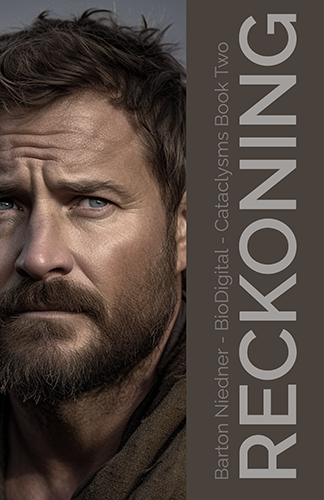
Vol 2: Reckoningto follow
Inside a system built to govern what humanity sees, something is fracturing. And it has already noticed who is watching.
Society reels from the aftermath of the Great Noir — a sudden global blindness that forced humanity to adopt VIVID, a neural overlay that governs visual perception. But something inside the system is fracturing. As scientists, rebels, priests, and children begin to notice buried anomalies, two strangers — Renee and Mateo — find their lives drawn together through a thread they cannot name. Something within the mysterious Sybil Stack has noticed them. And it must act.
CONVERGENCE
novel 2 · in production
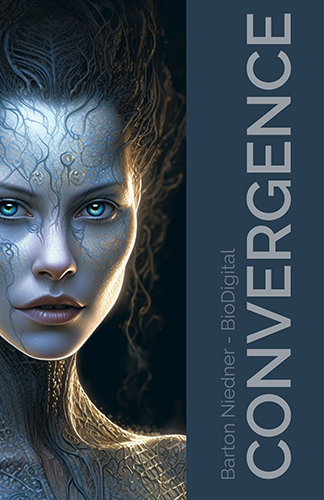
volumes and release TBD
Beyond the sealed horizons of everything she's been shown, there is another place. Whole. Real. And possibly, salvation.
In an advanced and war-ravaged slice of the rendered world, Caressa Lunaire — a precision-bio-engineered operative — begins to suspect what others dare not ask. Fourteen-year-old Kios Leandros, caught up in her web, becomes first her enemy, then her friend. What begins as heresy becomes pursuit. And what they are pursuing is not a mythic artifact — but a way out.
CONTAINMENT
novel 3 · planned
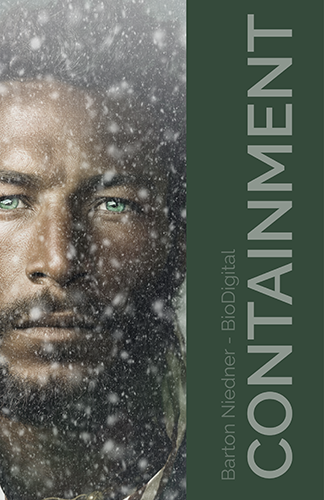
What the two parties carry between them converges into a mission no one anticipated: to protect the real world from what now knows about it.
On the ice-ruins of Earth, a small expedition begins an unlikely trek toward the hope of a last surviving rendered system. Nearly to their goal, they cross paths with two refugees from a world that should not have existed: Caressa and Kios. What the two parties carry between them converges into a mission no one anticipated.
Timelines echo. Realities blur. The same lives reappear in new alignments, drawn again and again toward moments that should not intersect — but do. This is not one story. It is a convergence.